Key Takeaways
- Lanzarote's dry, volcanic soils make traditional pipe locating harder, so methods like GPR and acoustic leak detection must be adapted to local ground conditions.
- Metal pipes can often be traced electromagnetically, while plastic and PVC pipes usually require ground-penetrating radar, acoustic techniques, or tracer gas.
- Locating non-metallic pipes (like PVC) is more challenging and often requires specialized equipment.
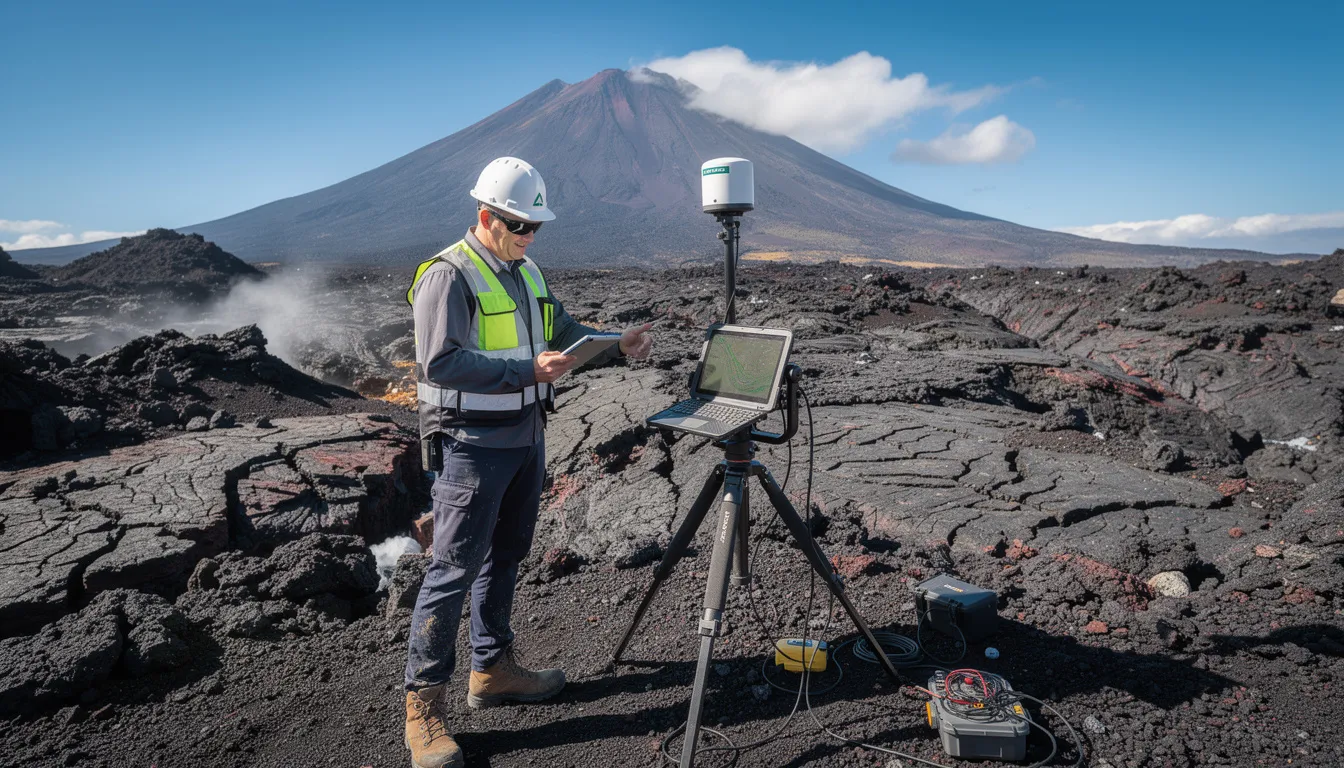
- RTK-enabled devices and GPR can quickly and accurately find underground pipes, even in challenging environments or when mapping large areas such as rural fincas or agricultural land.
- Accurate pipe detection prevents costly water loss, collapses, accidental utility strikes, and helps protect your yard before digging foundations, pools, or gardens.
- Detecting gas leaks is crucial to prevent hazards like fire or explosions, making underground pipe detection essential for safety and maintenance.
- Canary Detect, a professional leak detection company based in Lanzarote, combines several methods (GPR, acoustic, tracer gas, mapping) for reliable results on the island.
- Readers should call local specialists like Canary Detect for complex cases, older properties without plans, or pipes buried in dense volcanic rock or bajo lava flows.
Introduction: Underground Pipes in Lanzarote's Volcanic Terrain
Detecting underground pipes before any drilling, excavation, or renovation work is critical for property owners across Lanzarote. This guide explains how to detect underground pipes in Lanzarote's volcanic ground, covering the best methods and tools for accurate results. This article is intended for property owners, builders, and maintenance professionals in Lanzarote who need to locate underground pipes to prevent costly damage, ensure safety, and comply with local regulations. Whether you're building a swimming pool, installing garden irrigation, or simply renovating an older villa, knowing exactly where your buried utilities run can save you from expensive damage, wasted water, and dangerous accidents. On an island where construction often happens fast and plans from previous decades may be incomplete or missing entirely, taking the time to locate underground utilities properly is not optional—it's essential.
In the US, calling 811 ensures utility companies will determine and mark the location of underground lines on your property for free before any digging. Always check for similar services in your local area to avoid costly or dangerous mistakes.
Why Volcanic Terrain Makes Pipe Detection Harder
Lanzarote presents unique challenges compared to mainland Spain. The ground beneath your property likely consists of porous lava rock, loose volcanic gravel called picón, dense basalt layers, and backfilled trenches from previous construction. These varying soil and rock conditions affect how different detection methods perform, meaning techniques that work perfectly in clay-based soils elsewhere may need significant adaptation here. The volcanic terrain can interfere with signals, create confusing reflections, and hide pipes at unexpected depths.
Water on Lanzarote comes primarily via desalination plants and travels through long transport lines to reach properties across the island. This makes every litre valuable—and every undetected leak especially wasteful and expensive. When an underground water pipe develops a leak beneath volcanic rock, the water often disperses through porous material without visible surface signs, leading to enormous bills before the problem becomes apparent. Visual inspection can help determine the presence of underground pipes by revealing sunken lines in the dirt, unusual differences in vegetation growth, or damp spots.
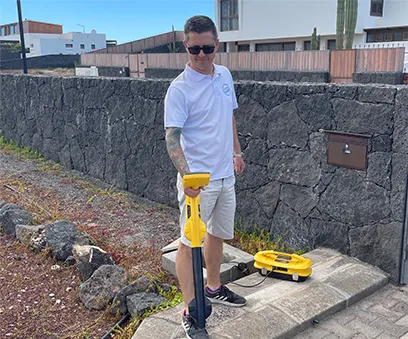
Canary Detect operates as a Lanzarote-based leak detection utility locating and emergency leak detection and repair specialist with extensive experience across Arrecife, Costa Teguise, Puerto del Carmen, Playa Blanca, and rural fincas throughout the island. Our team understands the specific challenges that volcanic ground presents and has adapted our equipment and techniques accordingly.
This article walks you through the main detection methods available for locating pipes in Lanzarote, explains when each approach works best, and clarifies when professional involvement becomes necessary for safety and accuracy. Reviewing plot plans, as-built drawings, and home inspection reports can also help determine likely pipe positions when original plans are incomplete or missing.
Step 1: Decide What You Need to Detect (Water, Wastewater, Irrigation, Gas)
Before reaching for any equipment, the first step in locating underground pipes is defining exactly what type of pipe system you need to find and what problem you're trying to solve. Different pipe types, contents, and pressures require different detection approaches, so it is important to determine the most suitable method based on these factors.
Common Buried Pipe Systems on Lanzarote Properties
Typical buried services on Lanzarote properties include:
- Desalinated water feeds from community meters to houses and pools
- Community irrigation rings serving multiple properties from shared sources
- Hotel and resort pool circuits with complex circulation systems
- Private septic lines running to soakaways or treatment systems
- Gas lines (where connected to bottled or piped gas supplies)
- Electrical and telecom cables that may share trenches with water lines
The pressure and contents matter significantly. A high-pressure mains water supply creates different acoustic signatures than low-pressure garden irrigation. A pressurised gas line requires different safety protocols than a gravity-fed sewer. Understanding what you're looking for shapes which methods will actually work.
Reviewing Existing Plans and Documentation
Gathering any available plans is an essential early step. Check with your local Ayuntamiento, community president, architect, or original builder for documentation. Even plans from the 1990s or early 2000s provide valuable starting points, though they should always be verified rather than trusted blindly. Local town halls or zoning departments may also hold utility overlay maps that show where pipes enter and leave your property.
At Canary Detect, we begin every job by clarifying the pipe type, approximate age, likely route based on construction era, and local building practices specific to each municipality. This preparation makes the actual detection work far more efficient and accurate, as it helps determine the appropriate detection method based on the pipe's material and contents.
Step 2: Map and Mark the Site Before Using Equipment
Before switching on any detection devices, a thorough site assessment and preliminary mapping saves considerable time and improves accuracy. This preparation stage requires no special tools—just careful observation and systematic documentation.
Start by walking your property and sketching a simple site map. Include:
- House footprint and all buildings
- Pool location and equipment room
- Driveway and paved areas
- Boundary walls and gates
- Water meter position (usually at the street)
- Garden taps and visible pipework
- Inspection chambers and manholes
- Any visible valve boxes
Use clear markers on the ground to indicate suspected pipe routes. Spray paint, chalk, or small flags work well for marking the likely path from your water meter or pump room toward the house, pool, and garden zones. These preliminary marks guide later equipment-based scanning.
Reading the Landscape for Clues About Pipe Routes
On Lanzarote, many pipes follow property boundaries or run parallel to walls. Builders historically avoided cutting through hard volcanic rock whenever possible, so pipes often take the path of least resistance along existing excavations or softer ground. Observing where previous trenches were backfilled—visible as different coloured gravel or settling in picón surfaces—provides practical clues about buried pipe routes.
Canary Detect technicians always combine desk study (reviewing plans, aerial photos, and construction records) with a physical walkthrough before activating any detection equipment. This approach prevents wasted scanning time and ensures we're looking in the most logical locations first.
Safety Precautions for Pipe Detection in Volcanic Ground
When it comes to locating underground pipes in Lanzarote's volcanic ground, safety must always come first. The unpredictable nature of volcanic soil—ranging from loose gravel to dense basalt and hidden lava tubes—means that every pipe detection project carries unique risks. Before any detection work begins, it's essential to thoroughly assess the ground for potential hazards such as unstable soil, concealed cavities, or areas where gas might accumulate. These conditions can pose serious threats not only to the pipe system but also to the safety of everyone on site.
Personal Protective Equipment
Utility locators and technicians should always wear appropriate protective gear, including gloves, safety glasses, and, in some cases, heat-resistant clothing. This is especially important when working in areas where there may be a risk of gas leaks or exposure to high temperatures from geothermal activity. Specialized equipment, such as ground penetrating radar (GPR), is crucial for safely detecting pipes in these challenging conditions. Ground-penetrating radar (GPR) can locate both metallic and non-metallic pipes underground with high accuracy. In contrast, electromagnetic methods are only effective for conductive (metal) pipes, making non-metallic pipes like PVC more challenging to detect. GPR devices are designed to handle the complexities of volcanic ground, helping teams accurately locate underground pipes without disturbing the soil more than necessary.
Monitoring Soil and Air Quality
Regular monitoring of both soil stability and air quality is another key safety measure. Changes in air composition can signal the presence of hazardous gases, while shifts in the ground may indicate the risk of collapse or subsidence. Teams should be prepared to halt work immediately if any unsafe conditions are detected. By following these safety precautions and using the right equipment and tools, property owners and professionals can minimize the risk of accidents, avoid costly repairs, and ensure the integrity of the entire pipe system during any locating underground operation.
Acoustic and Water Leak Detection in Volcanic Soil
Acoustic leak detection relies on listening for the sound waves created when water escaping under pressure vibrates through soil, pipes, and surrounding structures. High-sensitivity microphones in acoustic leak detectors can pick up vibrations or noises from escaping water or even a gas leak. This method is particularly effective when you know there's an active leak—perhaps indicated by an unexplained high water bill, a constantly running pump, or visible damp patches appearing where they shouldn't.
Digital Correlators and Ground Microphones
Modern digital correlators and ground microphones can detect leak sounds even through volcanic gravel, tiles, and concrete. The equipment filters out background noise from wind, traffic, and surf to isolate the distinctive hiss or rumble of water escaping from a pressurised pipe system. Detecting a gas leak is a crucial safety reason for using acoustic detection methods, as gas leaks can pose serious hazards such as fire or explosions.
The acoustic method involves two main approaches:
- Contact listening: Placing sensors on exposed fittings like valves, taps, and meters. Best for initial leak confirmation and rough location.
- Ground scanning: Moving a ground microphone across patios, paths, and floor surfaces. Best for pinpointing exact leak position.
On Lanzarote, water pressure varies significantly between zones and urbanisations. Higher elevations often have lower pressure, while coastal resort areas may have stronger supply. Our technicians adjust sensitivity settings and filtering to match local pressure conditions, ensuring accurate detection regardless of location.
It's important to understand that acoustic detection excels when there's an active leak but is less suitable for simply mapping the route of intact plastic pipes that aren't losing water. For route mapping without leaks, other methods like ground penetrating radar become necessary.
Canary Detect routinely uses acoustic methods for villas with hidden leaks between the community meter at the street and the house or pool room. These intermediate sections often run under driveways, gardens, or terraces where visual inspection is impossible.
Ground-Penetrating Radar (GPR) for Plastic and Mixed Pipes
How GPR Works
Ground penetrating radar works by sending high-frequency radio pulses into the ground and analysing the reflections that bounce back from buried objects. When those pulses encounter a change in material—such as a pipe, void, or different soil layer—they reflect back to the surface where the receiver interprets them as a visual display.
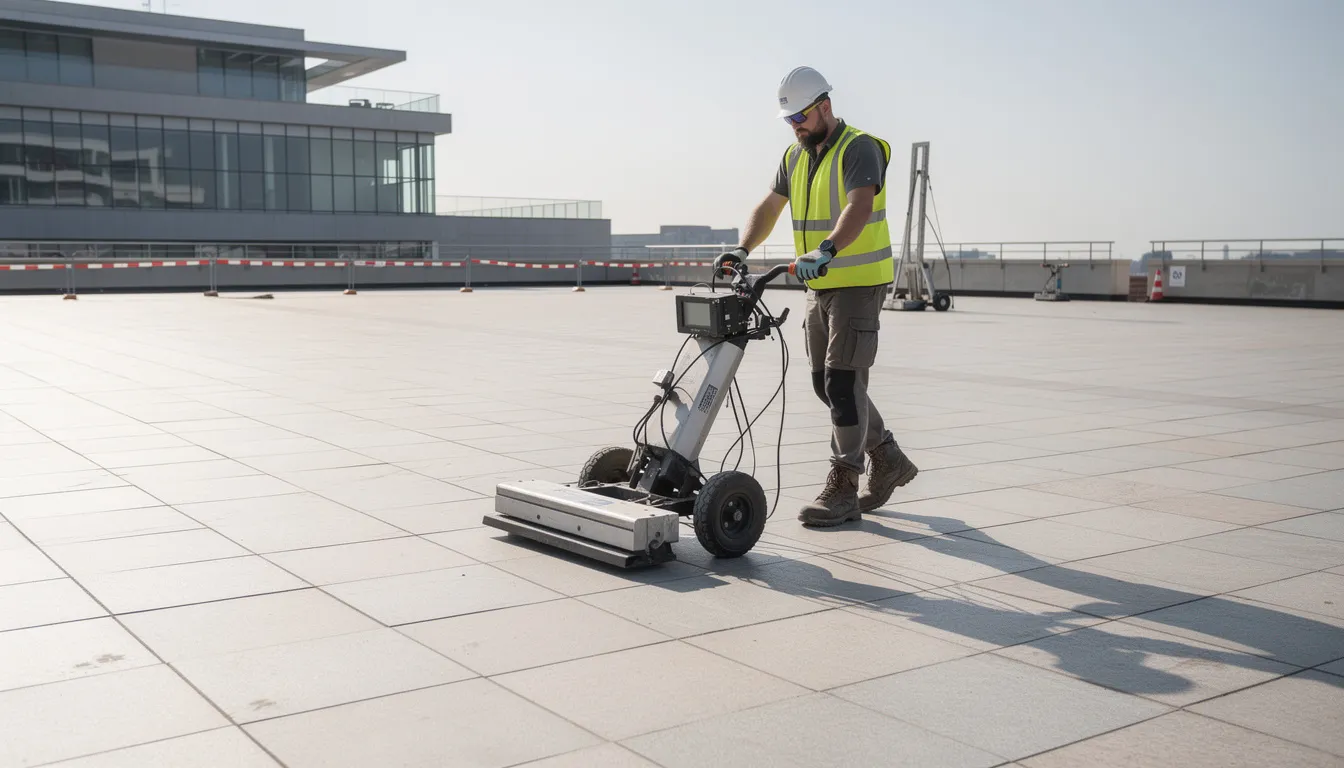
GPR is particularly valuable in Lanzarote because it can detect both metallic pipes and non-metallic pipes including PVC, polyethylene, and drainage materials. GPR can find underground pipes made of PVC and other non-metallic materials with a high degree of accuracy and precision. Locating non-metallic pipes, such as PVC, is particularly challenging because they lack metallic components that standard detectors rely on. Unlike electromagnetic methods that only work on conductive materials, GPR responds to any material change in the subsurface, making it essential for finding underground PVC pipes, plastic water lines, and mixed pipe systems. Professional utility mapping services often use a combination of GPR and electromagnetic (EM) methods for the most accurate results when trying to find underground pipes.
How Volcanic Soil Affects GPR Performance
Lanzarote's volcanic soils create variable conditions for GPR:
- Dry picón (volcanic gravel): Offers excellent radar penetration, often providing clear images to depths of several feet
- Dense basalt layers: Can limit penetration depth and require different antenna frequencies
- Mixed backfill: Creates complex returns that need experienced interpretation
- Reworked lava zones: May produce strong reflections that can be confused with pipes
Survey grids are laid out systematically across the target area, with the operator pushing or pulling the radar unit along parallel lines. On the screen, buried pipes appear as characteristic hyperbola shapes—curved patterns that indicate the location and approximate depth of an object below the surface.
Combining GPR with Other Methods
When GPR findings are combined with GPS coordinates or measured offsets from fixed reference points, the results can be compiled into a simple utility map showing pipe positions across your property. This documentation proves invaluable for future work and avoids repeated survey costs.
Operating GPR correctly on heterogeneous volcanic ground requires trained technicians who understand how to distinguish natural rock features, lava voids, and geological layers from actual buried utilities. At Canary Detect, our operators have developed specific protocols for Lanzarote's conditions, adjusting frequencies and processing techniques to deliver reliable results even in challenging terrain.
Electromagnetic and Radio-Frequency Locating for Metal Pipes
Electromagnetic locating remains the classic method for finding conductive underground utilities including copper and steel pipes, electrical cables, and any metallic pipes with continuous metal construction. This technique uses cable locators and utility locators that detect electromagnetic signals travelling along conductive materials.
Active vs Passive Locating Techniques
Active locating involves connecting a transmitter to a known metal pipe, valve, or fitting. The transmitter induces a specific radio frequency signal that travels along the metallic pipe, and a handheld receiver traces this signal above ground, marking the pipe's route as it goes. This method provides excellent accuracy and can confirm the exact location of specific lines.
Passive locating scans for existing electromagnetic signals without direct connection. Power cables emit detectable frequencies from the electricity they carry, and some pipes pick up ambient radio signals. This approach helps identify live electrical feeds and other energised utility lines, particularly useful when planning excavation near buildings.
The critical limitation: electromagnetic conductivity methods only work on metallic materials. Pure PVC pipes, polyethylene water lines, and plastic irrigation systems remain completely invisible to these devices unless they contain tracer wires or metallic fittings that can carry the signal.
Many Lanzarote installations combine metal risers (visible sections entering buildings) with plastic underground sections. A common scenario involves a copper or steel pipe at the water meter transitioning to underground water lines made from polyethylene. In these cases, Canary Detect traces the metallic portion electromagnetically, then switches to GPR or acoustic methods to follow the plastic section beyond the transition point.
Pipe locator equipment ranges from basic units suitable for straightforward metal tracing to sophisticated systems with GPS integration, 3D compass displays, and intelligent frequency scanning. Modern utility locators can distinguish between different buried lines running parallel to each other—essential in urbanisations where water, electric, and telecom services often share the same trench.
Tracer Gas and Sondes for Non-Metallic Pipes
When electromagnetic methods can't help and GPR alone isn't providing sufficient clarity, tracer gas detection and sonde locating offer powerful alternatives for finding non metallic pipes.
How Tracer Gas Detection Works
Tracer gas detection introduces a safe, non-toxic gas mixture (typically hydrogen and nitrogen, known as forming gas) into a drained pipe section. This gas, lighter than air, escapes from any leak points and migrates upward through soil, gravel, and even concrete. A sensitive surface detector—essentially a gas sniffer—sweeps across the area above, responding when it encounters gas escaping to the surface.
This method proves particularly effective when:
- Leaks are small or intermittent
- Pipes run under thick concrete slabs or decorative lava stone patios
- Multiple potential leak areas exist and acoustic methods can't isolate them
- Underground leak confirmation is needed before breaking any surfaces
Using Sonde Transmitters to Trace Pipe Routes
Sonde locating works differently. Sondes, also known as transmitter probes, are small radio-frequency transmitters that can be pushed through non-conductive, empty pipes on a flexible rod, allowing a receiver to follow their signal from above. A small radio-frequency transmitter (the sonde) is inserted into an accessible point—such as a clean-out, inspection chamber, or depressurised pipe end—and pushed or pulled through the pipe using rods or flexible cables. Above ground, a receiver tracks the sonde's signal, allowing technicians to mark the pipe's direction, depth, and any bends along its route.
Sonde methods excel for:
- Plastic wastewater and sewer lines
- Pool balance tanks and circulation pipes
- Garden irrigation loops without metallic components
- Empty conduits and drainage runs
Both techniques require careful preparation. Tracer gas detection needs pipe isolation, depressurisation, and proper ventilation protocols. Sonde work requires access points and appropriate rod or cable systems to navigate bends. These are typically carried out by experienced professionals like Canary Detect rather than as DIY projects, both for safety reasons and to ensure accurate results.
Infrared and Thermal Imaging in Warm, Dry Climates
Thermal imaging cameras detect temperature differences on surfaces, which can reveal the presence of pipes carrying hot or cold water beneath floors, walls, and exterior surfaces. While not a primary pipe-locating method, thermal imaging adds valuable supporting information to a comprehensive survey.
Lanzarote's warm, sunny climate creates both opportunities and challenges for thermal detection:
| Condition | Effect on Thermal Imaging | |------------------------|-----------------------------------------------------------| | Hot afternoon surfaces | May mask temperature differences from buried pipes | | Early morning scans | Cooler surfaces reveal anomalies more clearly | | Shaded areas | Provide better contrast for detecting temperature changes | | Night surveys | Can reveal leaks showing as cooler patches |
Best Uses for Thermal Imaging on Lanzarote Properties
Practical applications include:
- Locating hot water pipes running to holiday apartments from central boilers
- Tracing underfloor heating circuits in high-end villas
- Identifying cold patches in soil or floors from leaking drinking water lines
- Finding areas where water is saturating ground beneath surfaces
Thermal imaging alone cannot map complete pipe routes through volcanic terrain—the rock and gravel simply don't conduct heat consistently enough to trace long runs. However, when combined with acoustic findings and GPR data, thermal cameras can confirm suspected leak locations and help narrow down target areas before any excavation begins.
At Canary Detect, thermal cameras serve mainly as complementary tools, particularly effective for indoor investigations and shaded exterior surfaces where temperature contrast is strongest.
Creating a Long-Term Underground Pipe Map for Your Property
Once your buried pipes have been located through whatever combination of methods proved necessary, creating a permanent record protects your investment and simplifies all future maintenance work on your property. For mapping underground pipes with high accuracy, RTK-enabled devices can be used to achieve centimeter-level precision, which is especially valuable when documenting large areas such as farms or extensive land plots.
What to Include in Your Pipe Map
A useful pipe map should include:
- Pipe routes marked with distances from fixed reference points (house corners, walls, pool edges)
- Depths where determined during the survey
- Access points including valves, clean-outs, and inspection chambers
- Materials for each section (PVC, polyethylene, copper, steel)
- Installation dates if known, or estimates based on property age
- Repair history with dates and locations of any previous work
Measurements should reference permanent features that won't change even if surface finishes are replaced. House corners, boundary walls, and structural columns provide reliable reference points, while garden features, loose paving, and decorative elements may shift over time.
Sharing and Storing Your Pipe Map
Store both paper copies and digital files of your pipe map. Consider sharing with:
- Your architect if planning renovations
- Builders before any excavation work
- Gardeners planning deep planting or irrigation changes
- Property managers or rental agents
- Future buyers when selling
Canary Detect provides marked-up site sketches or digital files summarising all detected utilities at the conclusion of an investigation. These documents give property owners lasting value beyond solving the immediate problem that prompted the survey.
When to Call Canary Detect Instead of DIY
While preliminary mapping and visual inspection are reasonable DIY tasks, professional help becomes strongly recommended in several scenarios:
- Unexplained high water bills suggesting hidden leaks
- Constant pool water loss despite no visible cracks
- Suspected leaks under structural slabs or load-bearing floors
- Planned deep excavation for basements, water tanks, or foundations
- Older properties without any existing plans from the construction era
- Properties with multiple previous modifications and unknown pipe configurations
- Pre-purchase surveys before buying property in Lanzarote
Experienced professionals can determine the most effective detection method for your specific situation, taking into account the type of pipes, ground conditions, and property layout. RTK-enabled devices allow professionals to quickly and accurately locate underground pipes even in challenging environments.
Why Professional Equipment and Expertise Matter
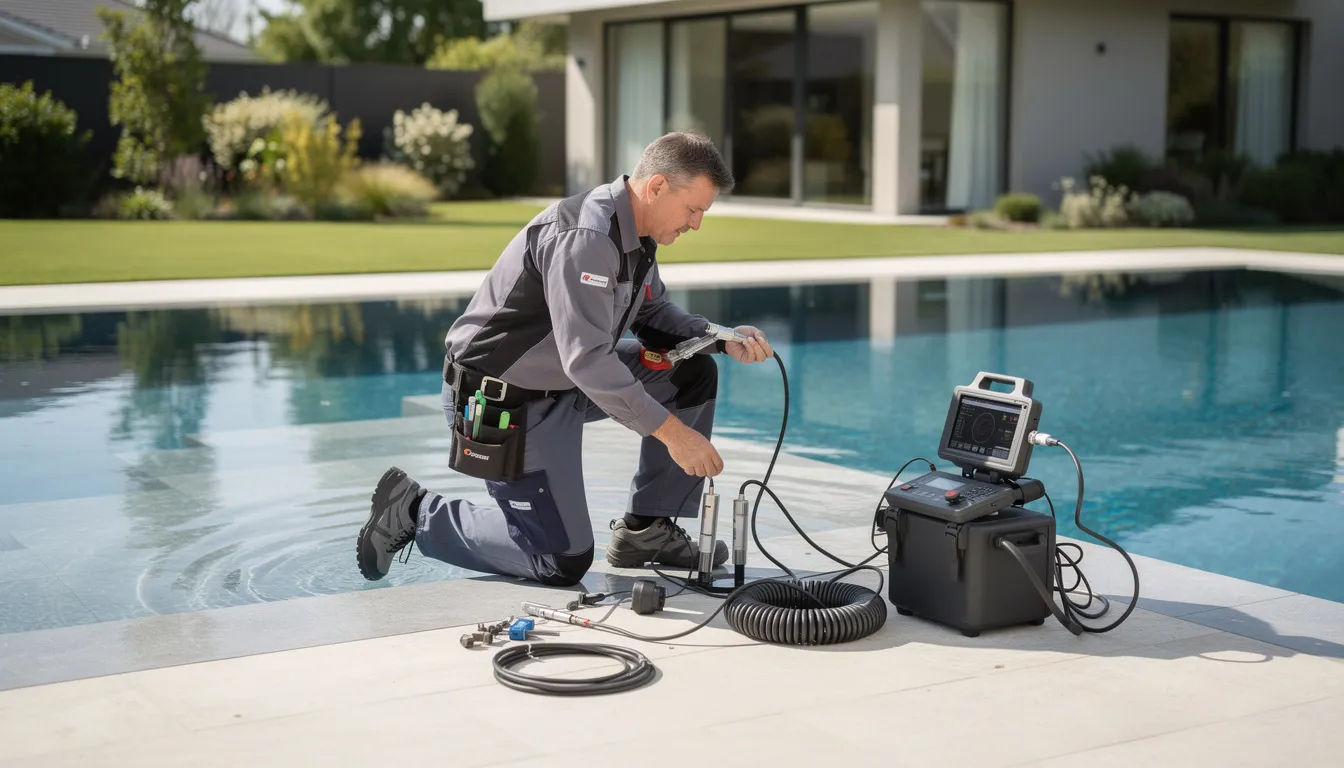
Buying or renting advanced GPR and acoustic equipment for a single job is rarely economical. Beyond the equipment cost, the learning curve for operating these devices effectively on volcanic ground is substantial. Misinterpreting signals leads to unnecessary tile breaking, wrong trenches dug in expensive landscaping, or accidental damage to electrical, gas, or telecom lines—with associated safety risks and costly repairs.
Canary Detect brings local knowledge that general contractors typically lack. We understand typical installation depths on Lanzarote (often shallower than mainland Spain since frost protection isn't needed), recognise the construction patterns from different eras, and know the quirks of older urbanisation layouts dating from the 1970s through 2000s.
We conduct surveys across the entire island, from densely built coastal resorts where pipes weave between multiple properties to isolated rural fincas where water lines may run hundreds of metres from community supplies to individual buildings.
Conclusion and Next Steps
Successfully locating underground pipes in Lanzarote's volcanic terrain is a task that demands careful planning, the right equipment, and a thorough understanding of both the ground and the pipe system itself. Whether you're dealing with metal pipes, plastic pipes, or underground PVC pipes, choosing the correct detection method is essential to avoid damaging utility lines and to prevent costly repairs down the line. Techniques such as ground penetrating radar, water leak detection, and acoustic methods each have their place, depending on the type of pipes and the specific needs of your property.
Accurate detection of underground water lines, gas lines, and other buried utilities not only protects your investment but also ensures the safety of everyone involved in construction or maintenance work. As technology advances, new devices and tools are making it easier to locate underground pipes with greater precision and less disruption to the surrounding ground. However, the expertise of experienced professionals remains invaluable, especially in complex environments like Lanzarote's volcanic soil.
For property owners, the best next step is to consult with specialists who understand the local conditions and have access to the latest equipment for leak detection and pipe location. Staying informed about new methods and technologies will help you make the right choices for your property and avoid unnecessary risks. By prioritizing safety, using the right tools, and relying on professional guidance, you can ensure that your underground pipe detection projects are completed efficiently, safely, and with minimal impact—protecting your property from leaks, gas hazards, and unexpected repairs for years to come.
FAQ
How deep are underground water pipes usually buried in Lanzarote?
Unlike colder regions where frost protection requires deep burial, Lanzarote's warm climate means domestic water pipes typically run between 30-60 cm below finished ground level. However, significant variation exists. Some older or improvised installations place pipes just beneath tiles or thin concrete screeds, while shared community mains running under roads may sit deeper for protection from traffic loads. Always verify depth with proper locating methods rather than assuming a standard, because subsequent resurfacing, landscaping, or backfill additions can change effective cover significantly from original installation.
Can I use a normal metal detector to find my plastic water pipes?
Standard hobby metal detectors respond only to metallic materials, so they cannot detect pure PVC or polyethylene pipes directly. While they might pick up metal fittings, clamps, or reinforcing mesh in nearby concrete, these signals can be misleading without experience interpreting them in context. Metal detectors may cause you to dig in wrong locations or miss plastic pipes entirely. For plastic pipe detection, dedicated utility locators, GPR equipment, or professional services like Canary Detect provide reliable results that consumer metal detectors simply cannot match.
Does volcanic rock interfere with ground-penetrating radar?
Certain dense or highly mineralised lava layers can reduce GPR penetration depth or produce strong reflections requiring expert interpretation. However, the reality varies greatly across Lanzarote. Many sites with dry, granular picón backfill actually provide excellent GPR conditions—better than heavy clay soils found elsewhere. The key factors are moisture content, mineral composition, and layer consistency rather than simply the presence of volcanic material. Experienced operators familiar with local geology adjust antenna frequencies, survey direction, and data processing to achieve usable results even in challenging areas.
How long does a typical pipe detection survey take for a villa?
Realistic timeframes depend on property complexity. A straightforward villa with one pool and garden within an urbanisation typically requires around 2-4 hours for comprehensive coverage. More complex properties with suspected multiple leaks, extensive gardens, older construction without documentation, or numerous separate pipe networks can extend to most of a working day. Time also depends on access conditions, whether active leaks must be pinpointed or only routes mapped, and how much preliminary information is available. Canary Detect usually provides an estimated duration and scope after an initial phone consultation or brief site assessment.
Is it possible to locate pipes under a tiled terrace without breaking tiles?
In most cases, yes. GPR scanning, acoustic listening through surface contact, and sometimes tracer gas detection allow accurate locating and leak pinpointing under tiles, stamped concrete, or decorative stone without immediate demolition. Once the target location is narrowed to a small area, only a focused opening is typically needed—often just a few tiles rather than metres of terrace. This non-destructive approach minimises damage and repair costs significantly. It's precisely this capability that leads homeowners and hotels across Lanzarote to contact Canary Detect before allowing contractors to begin breaking floors based on guesswork.
Need Professional Help?
Canary Detect offers professional leak detection services across Lanzarote with our No Find, No Fee guarantee.
Get a Free QuoteNeed The Leaky Finders?
Don't let hidden leaks damage your property. Contact Canary Detect - The Leaky Finders - for expert leak detection across Lanzarote with our No Find, No Fee guarantee.
Get a Free Quote